

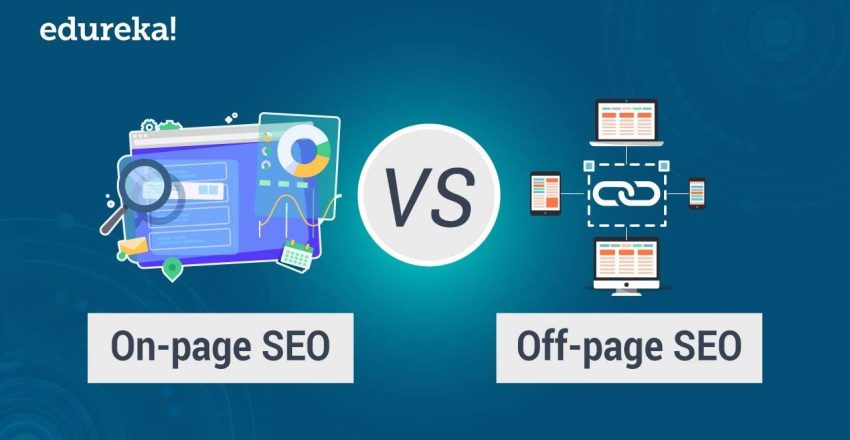
Google looks at a wide range of signals when deciding where to rank each page of a website. SEO professionals usually group the work into two areas: on-page SEO and off-page SEO.
On-page SEO covers everything you change on your own website. Off-page SEO covers signals that come from elsewhere, such as links from other websites and your Google Business Profile.
Some of these tasks take minutes. Others take months of steady effort, and some never really finish. This guide explains what each area involves, why you need both, and what to look for in an SEO service.
What On-Page SEO Covers
On-page SEO is the work done on your own website. You have full control over it, which makes it the natural place to start.
The main tasks include:
- Keyword research: finding the words your customers actually search for and matching each one to the right page.
- Page titles and meta descriptions: writing clear, accurate titles and summaries that appear in search results.
- Headings and structure: organising each page so people and search engines can follow it easily.
- Content quality: answering the questions customers ask, in more depth and more clearly than competing pages.
- Internal links: linking related pages together so visitors and Google can find your important content.
- Images: compressing files for speed and adding descriptive alt text.
Content needs ongoing attention. Prices, services and information change, and pages that are kept accurate and useful tend to hold their rankings better.
Technical SEO
Technical SEO is often treated as part of on-page work. It deals with how well search engines can crawl, understand and index your website.
It includes site speed, mobile usability, XML sitemaps, structured data and fixing broken links or redirect problems. Google Search Console is the main free tool for spotting these issues.
Many technical problems are invisible to visitors but can still hold a site back. A short audit usually reveals the most important ones.
What Off-Page SEO Covers
Off-page SEO is about your reputation across the rest of the internet. These signals help Google judge how trustworthy and relevant your business is.
The main areas include:
- links from other websites to yours, often called backlinks
- your Google Business Profile and its reviews
- consistent business listings in online directories
- mentions of your business in local news, industry sites and community websites
Off-page work is harder than on-page work because it depends on other people and other websites. That difficulty is one reason Google gives these signals real weight.
Why Links Still Matter
Links from other websites act like recommendations. They are not the only ranking factor, but it is difficult to reach the top positions for competitive searches without them.
Quality matters far more than quantity. A handful of relevant links from respected sites is worth much more than a large number of low-quality ones.
Google’s spam policies warn against link schemes, and building large numbers of poor links quickly can harm your rankings. Good link building is steady and careful, with natural anchor text and links from sites that make sense for your business.
Common ways to earn useful links include:
- listings with industry associations and local business groups
- suppliers and partners who link to the businesses they work with
- sponsorship of local clubs and community events
- helpful guides and resources that other sites want to reference
- articles or comments in relevant local and industry publications
Google Business Profile and Local Signals
For businesses serving a local area, the Google Business Profile is one of the most important off-page assets. It controls how you appear in Google Maps and in the local results at the top of many searches.
Make sure your business name, address or service area, phone number, website and opening hours are correct. Choose accurate categories, add your services and upload real photos.
Reviews are a strong local signal. Ask happy customers for reviews and reply to every one. Keep your business details consistent across your website, your profile and directory listings, as mismatched details can confuse both customers and Google.
Where Social Media Fits
Social media activity is not a direct ranking factor. It still helps people discover your business and talk about it.
That attention can lead to links, reviews and more people searching for your business by name. A well-run social media presence supports your SEO indirectly, as long as it suits your business and audience.
Which Should Come First?
For most businesses, start with on-page and technical SEO. There is little point attracting links to a website that is slow, unclear or hard for Google to read.
Once the foundations are in place, off-page work helps your improved pages compete. After that, both areas run side by side, with regular content updates on your site and steady work on links, reviews and your Business Profile.
What to Look For in an SEO Service
A good SEO service covers both on-page and off-page work and explains clearly what is being done each month. Before signing up, ask a few questions:
- What on-page changes will you make to my website?
- How will you earn links, and from what kinds of websites?
- How will you report on progress, and which results will you track?
- Am I locked into a long contract?
Be wary of anyone who guarantees a number one ranking. No one can promise that, because no one controls Google’s results.
SLINKY’s SEO work covers both on-page and off-page optimisation. We have been a Perth digital agency since 1998, you deal directly with senior people, and there are no lock-in contracts.
Talk to Us About Your SEO
If you would like to know how your website is tracking on both fronts, we are happy to take a look. Request a free quote or get in touch.