

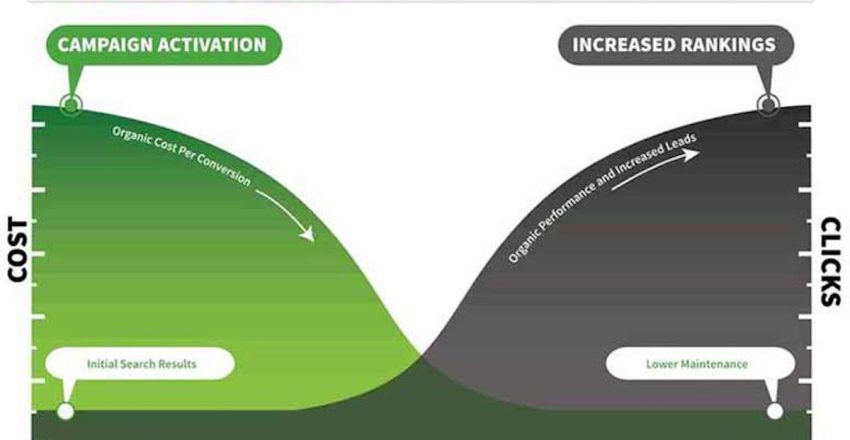
Search engine optimisation (SEO) isn’t a widely held skill set among the majority of business owners.
That is fair enough. There are dozens of businesses in every city set up to offer SEO services and consulting to businesses of all shapes and sizes.
But that doesn’t mean that it’s not worth knowing about. Take this example. If you were going to buy a new car, it would help to know more about it than if you only knew that you needed four wheels, a steering wheel and an engine. Doing some research about fuel efficiency, the cost of servicing and the resale value of different makes and models would make it much more likely you got a good deal when you went to purchase.
It’s the same with the basic elements of SEO. You might choose to do it yourself ‘in house’ after learning the ropes. Or you might choose to ‘buy’ the services you need from a provider. But either way, knowing the basics of the field will help get a better end result.
We’ve collated some of those basics right here to get you started.
Domain Quality
You might have seen in recent years an increase in the ‘non-standard’ domain names. These are the ones that end in ‘.io’ or ‘.ly’ or ‘.biz’. The more standard domain names end in the well known ‘.au’, ‘.com’ or ‘.org’ extensions. For most businesses, the tried and true extensions are the safer choice, as customers recognise and trust them.
Domain Tenure
It might be tempting to change domain names but it’s not without its risks. An established domain usually has history and links built up over time, and a change of domain can lose some of that value.
Quality
When we refer to quality for SEO purposes we are talking about things like your contact us and about us pages. These should be kept accurate and up to date. They are common to almost every website, and visitors use them to decide whether to trust your business.
Site Maps
An old tactic for improving SEO was to create dozens of pages with similar content to try and trick SEO ranking algorithms into thinking it was packed with a lot of relevant information. This no longer works as algorithms have evolved to pick up on that tactic. An XML site map also helps search engines find and understand the main pages of your site.
Loading Speed
This tip is useful for the basic elements of SEO and general usability as well. The loading speed of websites is crucial to how they are ranked, and maybe even more important, how customers perceive them.
The basic rule is that a slow site loses visitors. One thing to consider is your website hosting plan and the speeds it offers. But the other is what you actually put on your page.
If you have a host of auto playing videos or high-resolution images then it’s going to slow down that load speed, especially if your visitors have slow internet speeds (e.g. at home, or while commuting on public transport).