
Keywords are the words and phrases people type into Google when they want something. Using them in the right places on your website helps Google, and the people searching, understand what each page is about.
Where you place them still matters. The order of importance, though, looks quite different from the one many SEO guides described ten or fifteen years ago.
This article explains the old hierarchy, why its top two placements have lost their value, and which two placements deserve your attention first today.
The old hierarchy of keywords
For a long time, a common theory in SEO was that Google rewarded keywords most in the places where they were hardest to get.
Under that theory, the exact match domain sat at the top. A business trying to rank for “dog grooming Perth” would buy something like perthdoggrooming.com.au. Next came keyword-rich anchor text in links from other websites, which took time and effort to collect.
Page titles, URLs, meta descriptions and body content followed. These were easy to edit yourself, so the theory said they counted for less.
That model made some sense for its time. Google has since changed how it ranks pages, and both of the old top two placements now carry far less weight.
Why the old top two lost their power
Exact match domains
In 2012 Google released an update aimed at low-quality sites that ranked mainly because their domain name matched a search term. Since then, a keyword in the domain has been a weak signal at best.
A keyword domain is not harmful in itself. It just will not lift a thin or unhelpful site. For most businesses, a memorable brand name that customers can recall and search for is the better long-term choice.
Keyword-rich anchor text
Anchor text is the clickable text in a link. Links from other sites still matter a great deal, and the words used in those links still give Google some context.
The problem is manipulation. If most of the links pointing to your site use the exact phrase you want to rank for, that pattern looks unnatural. Google’s spam policies treat link schemes, including buying links or arranging large numbers of keyword-heavy links, as a violation, and sites can lose rankings because of them.
A natural link profile is mostly your business name, your web address and plain phrases such as “this article” or “their website”. Our article on which types of backlinks help your ranking covers this in more detail.
The top two placements today
Both of the placements that matter most now are on your own website, under your control.
1. The page title
The title tag is the text set in your page’s HTML head, often edited through an SEO plugin. Google uses it as a main source for the clickable headline in search results, so it shapes both what Google understands about the page and whether people click.
Put the main keyword near the start, keep it readable, and make each page title different. Around 55 to 60 characters is a sensible length to avoid it being cut off, although Google may rewrite titles it considers unhelpful.
2. The main heading and opening content
The main heading (usually the H1) and the first paragraph or two tell visitors straight away that they are in the right place. They also give Google a clear signal about the page’s focus.
Use the keyword, or a natural variation of it, in the main heading. Then answer the searcher’s need early, in plain language, rather than burying it under a long introduction.
The rest of the hierarchy
Below the top two, these placements still help, mostly by adding clarity:
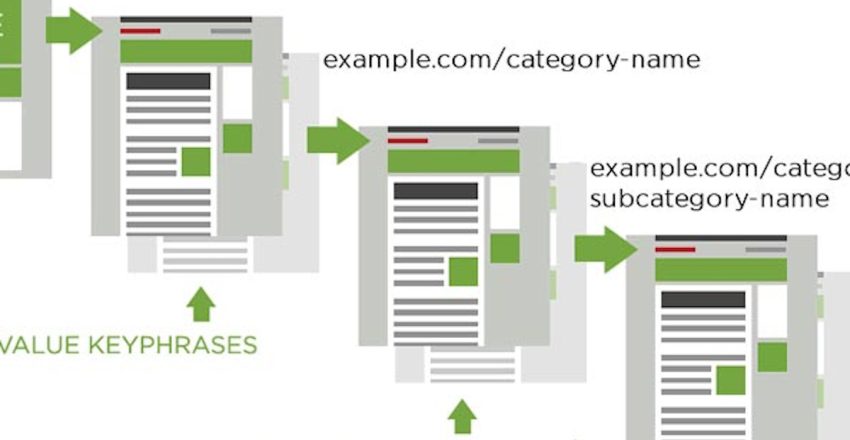
- The URL slug: Short, readable and descriptive, such as /dog-grooming-perth/.
- Subheadings: H2 and H3 headings that cover related questions and terms.
- Image file names and alt text: Describe the image accurately. This also helps people using screen readers.
- Internal links: Links between your own pages, with descriptive anchor text that tells readers what they will find.
- The meta description: Google has said it does not use this for ranking, but a clear description can win more clicks from the search results.
Why the content itself matters more than ever
Under the old model, body content sat at the bottom. Today it is close to the centre of everything.
Google’s systems are now much better at understanding topics, synonyms and intent. A page does not need to repeat an exact phrase many times to rank for it. Repeating keywords unnaturally is listed in Google’s spam policies as keyword stuffing, and it makes pages harder to read.
What tends to work is a page that fully answers the question behind the search, written by someone who knows the subject. Covering related questions, using real examples from your own work and keeping information current all help.
Practical steps for your website
- List your main services and the phrases customers use to find them. Google Search Console shows the searches already bringing people to your site.
- Give each important phrase one main page, so your pages are not competing with each other.
- Check each page title and main heading. The main keyword should appear naturally in both.
- Rewrite opening paragraphs so they answer the searcher’s question quickly.
- Tidy up URLs on new pages. Changing old URLs needs redirects, so take care before editing live pages.
- Build links by earning them: local partners, suppliers, industry bodies and genuinely useful content.
None of these steps needs special tools, and most can be done in an afternoon for a small site.
Need a hand with your keywords
SLINKY is a Perth digital agency, founded in 1998. If you would like a second opinion on your keyword targeting or on-page SEO, you will talk directly with senior people. Get in touch and we can take a look.